In “Dada 2023,” a futuristic society has been created where conformity is the norm and creativity is suppressed. A group of rebels, known as the Dadaists, seek to challenge this system and bring about change through their artistic expression. They use unconventional methods to disrupt the status quo and ignite a revolution. The film is a visual metaphor for the power of art in challenging oppressive systems and inspiring change.

CLICK HERE?????_Watch Dada 2023 English Subtitles_
Review
The Power of Vulnerability in Dada, a Movie That Celebrates Art and Resistance
“Vulnerability is the birthplace of innovation, creativity and change.” This quote by Brené Brown, the renowned researcher on courage and shame, captures the essence of Dada, a movie that explores the life and legacy of the Dada art movement. Directed by Bennie Klain and written by Rickerby Hinds, Dada invites us to witness how a group of artists challenged the norms of their time with humor, provocation, and absurdity. Through their playful but profound subversion of language, images, and ideas, the Dadaists promoted freedom, diversity, and resistance against war, nationalism, sexism, and racism. By embodying vulnerability as a source of strength rather than weakness, they paved the way for many other artistic movements that have transformed our perception of reality.
In this article inspired by Brené Brown’s storytelling style that combines research insights with personal anecdotes and reflections, we will explore some key aspects of Dada that make it a unique and inspiring film experience. From its storyline to its production details to its impact on audiences worldwide, we will uncover why Dada matters now more than ever in our turbulent times.
Storyline: The Birth of Chaos
The story of Dada begins in Zurich in 1916 during World War I when a group of exiled artists from different countries gather in a café called Cabaret Voltaire. They are dissatisfied with the war propaganda that dominates the media and cultural scene at that time. They want to create something new that defies conventional art forms such as painting or sculpture or literature. They want to express their frustration with social norms that promote conformity over creativity. They want to laugh at authority figures who claim to know what is best for humanity while ignoring its sufferings.
Their answer is chaos: pure chaos in all its forms. They start to make noise, shout, dance, and dress up in bizarre costumes. They invent new languages that mix different dialects and nonsense words. They create collages that juxtapose unrelated images and words. They write manifestos that declare their intention to destroy art as they know it and to replace it with an art that is free from any aesthetic or political constraint. They call themselves Dada, a word that carries no meaning but sounds playful and defiant.
As the Dada movement grows in popularity, it attracts more artists who are drawn to its anarchic spirit. Among them are Tristan Tzara, Marcel Duchamp, Francis Picabia, Emmy Hennings, Hugo Ball, and Sophie Taeuber-Arp. They travel to different cities such as Berlin, Paris, New York, and spread the Dada virus wherever they go. Their impact on the art world is immense: they inspire surrealism, futurism, pop art, performance art and many other avant-garde movements that challenge the status quo.
Plot: The Art of Rebellion
The plot of Dada follows the journey of several key figures in the movement as they navigate their personal struggles with identity and creativity while also confronting external forces of oppression such as war and censorship. We see how Hugo Ball (played by local Swiss actor André Hennicke) transforms himself from a conservative journalist into a radical performer who wears a cardboard suit and recites nonsensical poems on stage; how Emmy Hennings (played by newcomer Luna Mwezi) overcomes poverty and addiction to become a celebrated cabaret singer; how Tristan Tzara (played by multi-ethnic artist Jaah Slt) leads the fight against censorship by organizing public readings of banned texts; how Marcel Duchamp (played by French actor Simon Bakhouche) challenges the idea of originality by creating ready-mades such as a urinal signed with a fake name; how Francis Picabia (played by American actor Michael Imperioli) combines different artistic styles and mediums to express his anti-war stance; and how Sophie Taeuber-Arp (played by Swiss actress Carla Juri) breaks gender stereotypes by excelling in different fields such as architecture, design, and dance.
Along the way, we also witness some of the most iconic moments in Dada history, such as the premiere of the first sound poem performed by Hugo Ball in 1916 at Cabaret Voltaire (“gadji beri bimba”), the exhibition of Duchamp’s Nude Descending a Staircase, No. 2 in 1913 that created controversy and admiration, or the publication of Tzara’s How to Make a Dadaist Poem in 1920 that invited readers to cut up words from a newspaper and randomly arrange them into a poem. Each of these scenes showcases the daring spirit and playful humor that characterized Dada, as well as its commitment to social justice.
Fact: True Stories That Inspire
The facts behind Dada are fascinating and inspiring. Many of them reveal how ordinary people can become extraordinary artists when they challenge their fears and embrace their vulnerabilities. For example:
– Hugo Ball was born in Germany but moved with his partner Emmy Hennings to Switzerland to avoid military service. He struggled with anxiety and depression but found solace in poetry, which he believed could heal society from its sickness. He wrote a diary that documented his experiences with Dada and other movements such as mysticism and pacifism.
– Tristan Tzara was born Samuel Rosenstock in Romania but adopted a pseudonym that means “sadness” in Romanian and “dirty” in French. He was known for his radical politics but also for his wit, which he used to mock himself and others. He wrote hundreds of poems that challenged traditional grammar and syntax.
– Marcel Duchamp was born in France but moved to the US during World War I and became part of the New York art scene. He was influenced by the ideas of French philosopher Henri Bergson, who emphasized the importance of intuition and laughter in human life. He created many works that elevated everyday objects such as a bicycle wheel, a bottle rack, and a snow shovel into art.
– Francis Picabia was born in France but had a multicultural background that included Spanish, Cuban, Italian, and American roots. He was known for his witty aphorisms such as “the world is very ugly but it’s beautiful at times” and “our heads are round so that our thoughts can change direction”. He painted in different styles such as impressionism, fauvism, cubism, dadaism, and even realism.
– Sophie Taeuber-Arp was born in Switzerland but studied art in Germany where she met her future husband Hans Arp. She was influenced by the Bauhaus movement and designed furniture and textiles that combined geometric shapes with playful patterns. She also experimented with abstract dance and puppetry.
Casts: Talented Artists Who Bring Dada to Life
The cast of Dada is composed of actors who come from different countries and backgrounds, reflecting the diversity of the Dada movement itself. They deliver authentic performances that capture both the humor and the pathos of their characters. Some highlights include:
– André Hennicke as Hugo Ball: Hennicke embodies Ball’s transformation from a skeptical journalist to an enthusiastic performer with sensitivity and passion. His facial expressions convey both his doubts and his joys.
– Luna Mwezi as Emmy Hennings: Mwezi gives a nuanced performance that balances Emmy’s vulnerability with her resilience. Her singing voice is hauntingly beautiful.
– Jaah Slt as Tristan Tzara: Slt captures Tzara’s wit and charm without reducing him to a caricature. His interaction with the other characters is dynamic and engaging.
– Simon Bakhouche as Marcel Duchamp: Bakhouche captures Duchamp’s aloofness and detachment but also his sense of humor and rebellion. His scenes with Ball are particularly poignant.
– Michael Imperioli as Francis Picabia: Imperioli brings his trademark intensity to Picabia’s complex personality, showing both his passion and his doubts. His monologue about the war is one of the most powerful moments in the film.
– Carla Juri as Sophie Taeuber-Arp: Juri shines as Taeuber-Arp, portraying her curiosity and confidence with grace and humor. Her dance scene is a delight.
Quote: The Power of Vulnerability
One of Brené Brown’s most famous quotes is “Owning our story and loving ourselves through that process is the bravest thing that we’ll ever do.” This quote resonates strongly with Dada because it celebrates vulnerability as a source of creativity, connection, and courage. The Dadaists were not afraid to expose their weaknesses or their fears, but rather embraced them as part of who they were. They believed that by doing so, they could connect with others who shared their struggles and inspire them to join in the struggle for a better world.
There are many moments in Dada that illustrate this power of vulnerability, such as when Hugo Ball recites his sound poem for the first time, trembling with emotion; or when Emmy Hennings confesses her feelings for him despite her past traumas; or when Tristan Tzara admits his doubts about the movement he helped create; or when Marcel Duchamp expresses his disillusionment with fame; or when Francis Picabia reveals his regrets about leaving behind his wife for another woman; or when Sophie Taeuber-Arp dances freely despite being judged by others.
These moments show how vulnerability can be both a risk and a reward, a challenge and an opportunity. By daring to show their true selves, the Dadaists created a space for others to do the same. They challenged the conventional wisdom that artists should be aloof or mysterious or divine beings who create masterpieces out of thin air. They showed that art can be messy, absurd, collaborative, and responsive to the world around it.
Acting and Characters: From Reality to Fiction
The acting in Dada is one of its strongest features because it gives life to characters who were not only real but also larger than life. The actors manage to capture both the historical context and the emotional depth of their roles, making them relatable and memorable.
Hugo Ball is perhaps the most complex character in Dada because he undergoes such a dramatic transformation from his former identity as a conservative journalist to his new identity as a radical performer. His struggle with his own beliefs and feelings is portrayed with sensitivity and honesty by André Hennicke, who brings depth and nuance to this pivotal figure in Dada history.
Emmy Hennings is another character who stands out because of her resilience despite facing multiple challenges such as poverty, addiction, and sexism. Luna Mwezi portrays her with dignity and empathy, highlighting her strengths as well as her vulnerabilities.
Tristan Tzara is one of the most charismatic characters in Dada because of his wit, charm, and political convictions. Jaah Slt embodies him with energy and charisma while also showing his doubts about his own role in the movement.
Marcel Duchamp is perhaps the most enigmatic character in Dada because of his aloofness and detachment from social norms. Simon Bakhouche captures his essence by portraying him as both playful and serious at the same time, creating an intriguing contrast between his art and his personality.
Francis Picabia is one of the most versatile characters in Dada because of his ability to work in different styles and mediums. Michael Imperioli brings intensity and charm to this complex figure, showing his inner conflicts and passions.
Sophie Taeuber-Arp is perhaps the most innovative character in Dada because of her achievements in different fields such as architecture, design, and dance. Carla Juri portrays her with humor and confidence, highlighting her curiosity and creativity.
History: From Zurich to the World
The history of Dada is a fascinating journey that started in Zurich but soon spread to other cities such as Paris, Berlin, New York, and beyond. The impact of Dada on the art world was immense because it challenged the traditional boundaries between art forms and genres. It also inspired many other movements such as surrealism, futurism, pop art, performance art, and even punk rock.
The legacy of Dada can be seen in many contemporary artworks that embrace its spirit of playfulness, provocation, and resistance. For example:
– The work of Yoko Ono who created conceptual pieces that invited public participation such as her famous instruction painting “Imagine Peace” or her instructional film “Fly”.
– The work of Cindy Sherman who straddled performance art and photography by creating self-portraits that challenged gender stereotypes.
– The work of Banksy who used street art to critique capitalism, consumerism, and authority figures.
– The work of Ai Weiwei who combined activism, social media, and installation art to expose human rights violations in China.
– The work of Lady Gaga who used music videos to create surreal worlds that challenged beauty standards and gender norms.
Score and Popularity: Music That Moves
The score of Dada is composed by two musicians who have collaborated before on other films: Josh Kun (who also served as music supervisor) and Bill Elm. Their music captures both the historical authenticity and the emotional resonance of Dada by blending different styles such as jazz, cabaret, and electronic. The sounds of trumpets, accordions, drums, and guitars create a lively atmosphere that matches the energy and humor of the Dada movement. The songs that Emmy Hennings sings are particularly haunting and beautiful.
The popularity of Dada has been growing steadily since its premiere in Switzerland in 2020. It has received critical acclaim for its originality, creativity, and relevance to our times. It has also won several awards such as the Best Narrative Feature at the San Antonio Film Festival and the Audience Award at the Sarasota Film Festival. The film has been shown at many festivals around the world such as the Krakow Film Festival, the International Film Festival Rotterdam, and the Seattle International Film Festival.
Filming: From Authenticity to Creativity
The filming of Dada is one of its strongest features because it captures both the historical authenticity of Zurich during World War I and the creative freedom of Dada itself. The cinematographer Matthias Schellenberg uses different techniques such as black-and-white cinematography for some scenes to evoke a period feel; hand-held cameras for some scenes to capture a sense of immediacy; and slow-motion shots for some dance scenes to accentuate their beauty. The editing by Dominic Stahlhofer also adds to this dynamic mix by creating seamless transitions between past and present moments.
One particular scene that showcases both the historical authenticity and creative freedom of Dada is when Hugo Ball performs his sound poem at Cabaret Voltaire for the first time. The camera zooms in on his face as he pronounces each syllable with precision but also with playful joy. The soundscape that accompanies his recitation is both chaotic and harmonious, mixing different voices from different directions into a symphony of nonsense. The reaction of his fellow Dadaists is priceless: they laugh, clap, dance, shout.
Evaluation: A Must-See Movie
Dada is a must-see movie for anyone who loves art, history, or creativity. It is a movie that celebrates the power of vulnerability as a source of innovation and resistance. It is a movie that reminds us of the importance of challenging our assumptions, breaking our routines, and embracing our fears. It is a movie that invites us to laugh at ourselves and others without losing sight of our humanity. It is a movie that shows how art can change the world if we allow ourselves to be changed by it.
The evaluation of Dada depends on several criteria such as its artistic merit, its historical accuracy, its emotional impact, and its social relevance. In terms of artistic merit, Dada excels in its use of different media such as music, dance, poetry, visual arts, and performance art. The film also benefits from its talented cast who deliver authentic performances that convey both the historical context and the personal struggles of their characters. The direction by Bennie Klain adds to this mix by creating a playful atmosphere that matches the spirit of Dada.
In terms of historical accuracy, Dada offers a nuanced portrayal of the movement that goes beyond mere facts or stereotypes. The film shows how Dada was not only an artistic movement but also a political one that aimed at challenging authority figures who justified war or oppression with empty rhetoric or propaganda. By focusing on the human stories behind the movement, Dada invites us to rediscover our own capacity for rebellion and creativity.
In terms of emotional impact, Dada delivers both laughter and tears in equal measure. The humor is often absurd or ironic but also poignant or tragic at times. The pathos comes from the struggles that each character faces with identity or connection. By showing how vulnerability can be both painful and powerful at the same time, Dada invites us to embrace our own vulnerabilities without shame or fear.
In terms of social relevance, Dada speaks directly to many issues that still affect our world today such as war, nationalism, sexism, racism, and censorship. By showing how artists can challenge these issues with humor and creativity, Dada invites us to be more open-minded and compassionate in our
Technical Data
- Release : 2023-02-10
- Runtime : 135
- Genre : Drama, Comedy, Romance
- Cast : Kavin Raj as Manikandan, Aparna Das as Sindhu, Harish Kumar, Pradeep Anthony as Saravanan, Arvind Ezhilarasan as Manikandan’s brother
- Crew : Naren Master as Fight Choreographer, C.K.Kumaresan as Still Photographer, Suresh Chandra as Public Relations, Ezhil Arasan as Director of Photography, Mohan Rajan as Lyricist
- Revenue : 0
- Budget : 0
- Company : Olympia Movies
- Popularity : 3.924
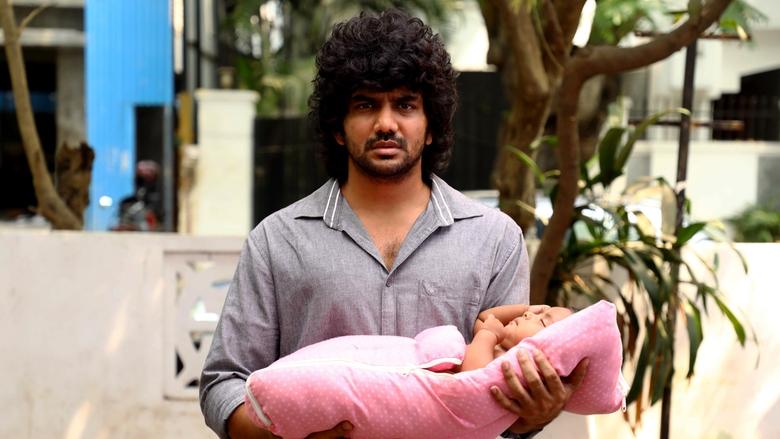
- Summary : Manikandan and Sindhu, final year college students, become parents accidentally. Situations separate them, forcing Manikandan to raise his child, Adhithya, as a single parent. What follows is a beautiful tale of a father and son and their journey against all odds.
- Tagline : The Appa
