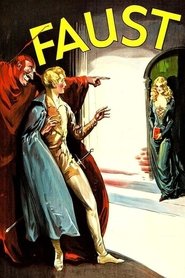
“Faust 1926” is a silent black and white film about a man who sells his soul to the devil. The movie is dark, atmospheric, and hauntingly beautiful with its stunning visuals and striking use of shadows. The acting is emotive, especially the portrayal of Mephistopheles. The ending is intense, leaving the viewer with a sense of unease. Overall, “Faust 1926” is a cinematic masterpiece that has stood the test of time.
CLICK HERE??????????_Watch Faust 1926 English Subtitles_
Review
Faust: A Struggle for Redemption
In life, we are all confronted with choices that could shape our future. The choices we make can take us down a path of success or failure, and sometimes it can be challenging to determine which path is the right one. The movie Faust, directed by F.W. Murnau, delves into the depths of choice and consequence.
Faust is a German Expressionist film based on Johann Wolfgang von Goethe’s Faust Part One. It was released in 1926 and starred Gosta Ekman as Faust and Emil Jannings as Mephisto. The film was widely popular among audiences at the time and remains a classic today.
The storyline of Faust tells the story of an aging alchemist named Heinrich Faust who becomes disillusioned with life and seeks the help of the devil, Mephistopheles, to find meaning in his existence. In return for his assistance, Mephistopheles demands that Faust sign a contract selling his soul to him.
The plot takes an interesting twist when Faust falls in love with Gretchen (Camilla Horn), a young woman thrown into poverty after her mother is executed for killing her child. With Mephistopheles’ assistance, Faust seduces Gretchen, leading to her tragic downfall.
The movie explores heavy themes such as sin, morality, redemption, love and lust. As we watch the story unfold before our eyes, we see Heinrich struggle with his inner demons as he tries to become a better person. For him to achieve this goal he must confront difficult challenges such as temptation from evil forces while trying to maintain his integrity.
The cast did an excellent job portraying their respective roles. Emil Jannings’ performance as Mephistopheles was outstanding; he brings sinister charm and wit to the character while Gosta Ekman delivered a compelling portrayal of Heinrich Faust, his descent into darkness and eventual redemption.
The story of Faust has been retold in various forms throughout history. As such, the movie has a rich historical context that provides a fascinating insight into the world of German Expressionism. The film’s popularity was due to its unique aesthetic, which featured elaborate sets and costumes that added to the overall grandeur.
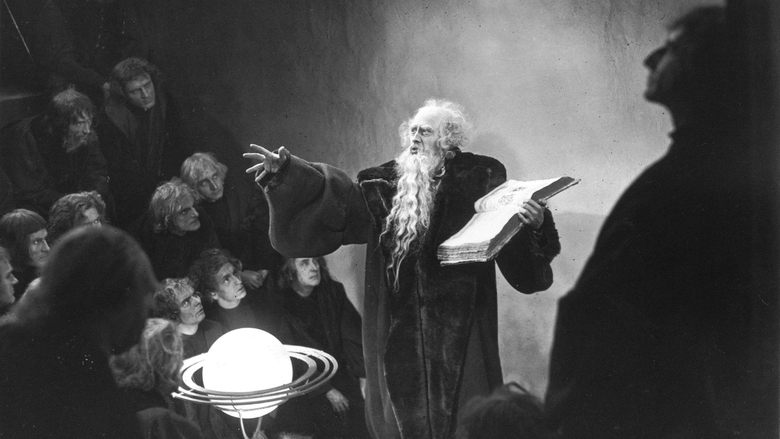
The score and popularity of Faust still hold up to this day. It is regarded as one of the greatest films ever made and has been praised by several critics for its storytelling, acting, and cinematography. The cinematography brilliantly captures the essence of each scene with its use of shadow and light to create an atmosphere that is both beautiful and haunting.
The filming took place in Germany during a time when Expressionism was at its peak. This movement sought to convey emotion through the use of distorted visuals instead of realism. This technique was evident in Faust with its stylised sets, make-up, and costumes that helped to create an immersive experience for viewers.
The dialogue is sharp while the special effects created a sense of fantasy within the film. One notable scene features Faust transforming into a young man using makeup and camera tricks, which helped capture the character’s pursuit for youth as well as his thirst for knowledge.
Although Faust may have received critical acclaim upon release, it did not receive any major awards during its time. However, years later, the film continues to inspire filmmakers around the world who have praised it for its visual storytelling technique.
In conclusion, Faust continues to stand out as one of the most captivating films ever made thanks to Murnau’s vision brought to life by an incredible cast and crew. The movie remains relevant today because it explores themes that are timeless like temptation morality love lust redemption sacrifice etc., themes that remain prevalent in our everyday lives even today.
Faust teaches us about choices: how our choices can lead us down dark, dangerous paths, how sometimes the road to redemption can be long and arduous but that it is never too late to turn back. The movie reminds us that our choices not only shape our lives but also those around us, and we must strive to make the right ones.
Technical Data
- Release : 1926-10-13
- Runtime : 116
- Genre : Drama, Fantasy, Horror
- Cast : Gösta Ekman as Faust, Emil Jannings as Mephisto, Camilla Horn as Gretchen Marguerite, Frida Richard as Gretchens’s Mother, William Dieterle as Valentin
- Crew : Erich Pommer as Producer, Werner R. Heymann as Original Music Composer, F. W. Murnau as Director, Hans Rameau as Assistant Director, Carl Hoffmann as Director of Photography
- Revenue : 0
- Budget : 0
- Company : UFA
- Popularity : 7.696
- Summary : God and Satan war over earth; to settle things, they wager on the soul of Faust, a learned and prayerful alchemist.
- Tagline : The Voice of the Tempter.
