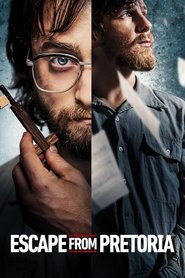
Three political prisoners with makeshift tools try to escape from Pretoria Central Prison, also called the “Robben Island of South Africa,” and outwit the apartheid government. Based on true events, this film is a heart-pounding thriller about fighting for freedom.
CLICK HERE????????_Watch Escape from Pretoria 2020 English Subtitles_
Review
The Power of Courage and Creativity in “Escape from Pretoria”
In “Escape from Pretoria,” the new thriller based on a true story, two white South African political activists, Tim Jenkin and Stephen Lee, try to escape from the notorious maximum security prison in Pretoria in 1979. They make wooden keys for the doors of their cells and hide the evidence in their books, using ingenuity, persistence, and collaboration. The stakes are high, as they face possible life sentences or even execution for their anti-apartheid activities against the apartheid regime. Yet they also gain agency, purpose, and connection through their daring attempt to break free from a system that oppresses them and others.
What can we learn from this movie about courage and creativity? How can we apply these lessons to our own lives? As Brené Brown suggests in her research on vulnerability, courage involves facing uncertainty, risk, and emotional exposure with intentionality and resilience. It requires acknowledging our fears and insecurities while also affirming our values and beliefs. Creative problem-solving entails using imagination, curiosity, and adaptability to explore multiple options for addressing challenges or opportunities. It involves embracing ambiguity and ambiguity as potential sources of novelty or growth.
These themes resonate throughout “Escape from Pretoria,” which portrays Tim Jenkin (Daniel Radcliffe) as an earnest but restless idealist who joins a banned anti-apartheid group led by Denis Goldberg (Ian Hart) in Johannesburg. He learns how to make pamphlets and distribute them secretly, but soon realizes that his activism can also put him behind bars. When he gets arrested at a security checkpoint while carrying incriminating documents on a train to Cape Town, he faces interrogation by Colonel Kruger (Nathan Page) who tries to break him through intimidation tactics such as sleep deprivation and isolation.
Stephen Lee (Daniel Webber), another activist who shares Tim’s vision but has more experience and skepticism, arrives in the same prison after he gets caught with explosives. He warns Tim about the dangers of trusting anyone inside or outside the walls, including their fellow inmates who may be informants or opportunists. Yet he also teaches him how to make the wooden keys and encourages him to use his skills as a graphic designer to forge exit visas for them.
What emerges from their interactions is a blend of vulnerability and resilience, creativity and discipline, fear and hope. Tim doubts himself at times and feels overwhelmed by the risks they face, but also draws strength from his connection to Stephen and Denis, who share his passion for justice and dignity. He uses his artistic talents to design convincing forgery documents while also learning from Stephen’s engineering expertise how to make the keys precisely enough to unlock multiple doors without raising suspicion.
The tension builds gradually as Tim and Stephen prepare for their escape attempt, which involves timing their moves with precision, avoiding security cameras and patrols, overcoming obstacles such as faulty locks or noisy floors, and staying calm under pressure. The shadows become both allies (providing cover) and foes (causing disorientation). The silence becomes both soothing (signaling safety) and threatening (magnifying sounds). The dialogue becomes both minimal (reducing risk of exposure) and essential (coordinating actions).
The movie maintains its grip on our attention by using effective cinematography that contrasts the claustrophobic confinement of the prison cells with the wide open spaces of the surrounding landscapes. It also highlights some historical facts about apartheid South Africa that add context to the story: such as how black prisoners were treated far worse than white ones; how torture was commonplace; how censorship stifled free speech; how solidarity across racial divides was rare but precious.
What elevates “Escape from Pretoria” beyond a mere genre exercise is its humanistic touch that shows us glimpses of humanity amid dehumanization. We see how Tim and Stephen struggle with their own flaws and limitations, but also overcome them through their shared purpose and values. We see how some of the prison guards, such as Dennis (Mark Leonard Winter), show signs of empathy and moral conflict, despite their loyalty to the regime. We see how even in the darkest moments, there may be sparks of humor or kindness that offer glimpses of hope.
One memorable scene, for instance, involves Tim pretending to be sick in order to distract a guard while Stephen sneaks behind him to unlock a door. As Tim fakes vomiting and groaning loudly, the guard looks more annoyed than alarmed. When he finally opens Tim’s cell door to check on him, he asks if he feels better now. Tim nods weakly, then thanks him for his caring attitude. The guard looks confused but amused by this unexpected compliment.
Another touching scene involves Denis Goldberg visiting Tim and Stephen in their cell just before they leave. He tells them about his own escape from a prison in South Africa many years ago when he was still young like them. He advises them not to stop fighting for freedom even if they get caught again or if they feel overwhelmed by despair or anger. He acknowledges that the road ahead may be long and hard, but also reminds them of the power of hope: “When we have nothing else left, we have our dreams.”
I highly recommend “Escape from Pretoria” as a movie that combines entertainment with education, suspense with substance, action with reflection. It invites us to ponder timeless questions about human nature and society: What does it mean to be free? What risks are we willing to take for our beliefs? What resources do we have within ourselves and our communities that can help us overcome adversity? What role can creativity and collaboration play in resisting oppression? How can we cultivate courage without denying vulnerability?
As Brené Brown would say: “We cannot selectively numb emotions – when we numb the painful emotions, we also numb the positive emotions.” “Escape from Pretoria” models this idea well by showing how Tim and Stephen use their emotional intelligence to navigate through a challenging situation while also preserving their own sense of agency and dignity. They feel scared, angry, sad, and hopeful, but they don’t let those feelings paralyze them or define them. They act with intentionality and purpose, even in the face of uncertainty.
In the end, “Escape from Pretoria” reminds us that we are all capable of bravery and ingenuity when we tap into our own creativity and connect with others who share our vision of a better world. We may not have to escape from prison to do so, but we can still find ways to challenge injustice and promote equity in our own spheres of influence. We can still learn from those who have faced tougher challenges than ours and emerged stronger and wiser. We can still dream of a future where freedom is not a privilege but a right for all.
Technical Data

- Release : 2020-03-06
- Runtime : 102
- Genre : Drama, History, Thriller
- Cast : Daniel Radcliffe as Tim Jenkin, Daniel Webber as Stephen Lee, Ian Hart as Denis Goldberg, Mark Leonard Winter as Leonard, Nathan Page as Mongo
- Crew : Lisa Brennan as Set Decoration, David Barron as Producer, David Hirschfelder as Original Music Composer, Gary Hamilton as Producer, Geoffrey Hall as Director of Photography
- Revenue : 0
- Budget : 0
- Company : MEP Capital, Momentum Pictures, Hamilton Entertainment
- Popularity : 21.605
- Summary : South Africa, 1978. Tim Jenkin and Stephen Lee, two white political activists from the African National Congress imprisoned by the apartheid regime, put a plan in motion to escape from the infamous Pretoria Prison.
- Tagline : Survival is key
