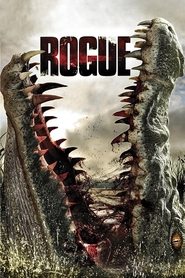
“Rogue 2007” is a thriller movie about a group of tourists who embark on a river cruise, only to find themselves hunted by a ruthless killer crocodile. The tension builds as the group fights to survive against the deadly predator in a remote Australian wilderness. With thrilling action and intense moments, “Rogue 2007” is an adrenaline-fueled ride that will leave you on the edge of your seat.
CLICK HERE?????????_Watch Rogue 2007 English Subtitles_
Review
The Rogue Elephant in Our Minds: A Cinematic Exploration of Morality and Survival
What do you get when you cross an action movie with a wildlife documentary, add some social commentary, and mix in a dash of horror? If you’re lucky, you might end up with something like Rogue, a 2007 Australian film directed by Greg Mclean and starring Radha Mitchell and Michael Vartan. But is luck enough to make a good movie? Let’s dive into the murky waters of this film and see if we can find any pearls.
First, let’s set the scene. The story takes place in Northern Australia, where Kate Ryan (Mitchell), a tough and compassionate journalist, leads a group of tourists on a river cruise to observe crocodiles in their natural habitat. Among her clients are Peter McKell (Vartan), a cynical travel writer who dislikes nature and people alike; Neil Kelly (Sam Worthington), a daredevil photographer who wants to capture the ultimate shot; Allen (John Jarratt), the seasoned captain of the boat who knows the river like his own veins; and several other stock characters who serve as cannon fodder or red herrings.
At first, everything seems routine and peaceful. Kate tries to charm Peter into seeing the beauty of nature, Neil flirts with her for no apparent reason (except maybe to show that he’s not gay), Allen tells some jokes about crocs (which are mildly amusing but not hilarious), and the tourists take photos of birds and trees. Then, as if on cue, something disrupts the idyllic scenery: two hapless backpackers in distress wave at the boat from a muddy bank. Allen hesitates to help them, saying that it’s not safe to go ashore because of “rogue” crocs that can attack without warning or mercy. Kate insists on rescuing them anyway, arguing that it’s their duty as human beings to help others in need. Peter and Neil adopt different attitudes: Peter thinks it’s a stupid risk, while Neil sees it as a great opportunity to get some thrilling footage.
So, the boat lands, and Kate and Neil go ashore to look for the missing backpackers. They find their tent torn apart and their belongings scattered around, but no sign of them. Suddenly, a huge crocodile lunges at them from the bushes and kills one of them (I won’t spoil who). The other manages to escape back to the boat, but not before getting bitten and injured. Chaos ensues as people panic and try to fend off the croc with whatever weapons they have (including a flare gun, which turns out to be useless). The croc damages the boat’s engine and traps them in a shallow lagoon surrounded by mangroves. To make things worse, it turns out that this is not just any croc: it’s a massive bull male, over 25 feet long, with scars on its face and a grudge against humans.
Now we enter the territory of survival horror. The group realizes that they are stranded in hostile territory with no means of communication or transportation, low on food and water, injured or traumatized by the attack, and facing an almost unbeatable foe that can strike at any moment. Their only hope is to wait for rescue or find a way to escape using whatever resources they can scavenge from nature or each other. This includes sacrificing some members for bait or distraction, making traps or weapons out of bamboo sticks and fishing lines, using flares or fireworks as signals or distractions (which may attract or repel the croc), digging trenches or hiding places in the mud (which may also harbor snakes or spiders), and trying not to lose hope or sanity in the process.
As we watch this grueling ordeal unfold, we might wonder why we subject ourselves to such a spectacle. What is the appeal of this kind of movie? Is it just a thrill ride, a way to experience danger and excitement from the safety of our seats? Is it a test of our empathy and morality, a way to see how we would react in extreme situations? Is it a comment on human nature and society, an allegory for the struggle between civilization and wilderness, reason and instinct, order and chaos? All of these elements are present in Rogue, but how well do they blend together?
Let’s examine some aspects of the film more closely.
Storyline
The plot of Rogue is not very original or unpredictable. It follows a typical pattern of survival horror films, where a group of people get stuck in an isolated place with a deadly threat and have to fight for their lives against all odds. The twist is that the threat is not supernatural or alien but natural and realistic (or at least plausible). Crocodiles are not usually portrayed as villains in movies (except maybe in cheesy B-movies), but they are certainly scary enough to be considered as such. They are ancient predators that have survived for millions of years by adapting to various environments, including rivers, swamps, mangroves, coasts, and even oceans. They can grow up to 23 feet long and weigh over 2 tons, with jaws that can crush bones and teeth that can regrow indefinitely. They can swim silently underwater for hours or leap out of water vertically to catch prey above or beside them. They have excellent senses that allow them to detect vibrations, heat, light, sound, and chemical signals from far away. And they have remarkable resilience that enables them to survive droughts, floods, disease outbreaks, habitat loss, hunting pressure (by humans or other crocs), and even wars.
The crocodile in Rogue is no exception to this formidable reputation. It’s portrayed as a smart and vengeful creature that has learned to associate humans with food and pain. It’s also depicted as a victim of human greed and violence, as it has been wounded by poachers or fishermen who cut off its tail or snout for souvenirs or meat. This element gives the croc some sympathy and complexity, but it also makes us wonder why it acts like a serial killer rather than just avoiding humans altogether. Is it really necessary for the croc to hunt down every person on the boat, even if they don’t pose an immediate threat? Is it just a matter of territoriality or revenge, or is there more to its behavior than meets the eye? Unfortunately, the movie doesn’t delve too deeply into these questions.
News
The production process of Rogue was not without its challenges and controversies. According to some reports, the film crew had to deal with real crocodiles in some scenes (although most of the croc footage was created using animatronics and CGI). Some local activists accused the filmmakers of exploiting wildlife for entertainment purposes and endangering both animals and people by luring or provoking them. The director defended his approach by saying that he wanted to show both sides of the conflict between humans and nature, but also admitted that he had to take some risks to get realistic shots. The cast members also had their share of difficulties on set, such as filming in muddy waters with leeches and snakes, enduring extreme weather conditions, and coping with sporadic injuries (including one actor who accidentally stabbed himself with a bamboo stick). Despite these obstacles, the film was completed on schedule and released in several countries (including Australia, USA, UK, Japan) with mixed reviews.
Plot
The structure of Rogue is simple but effective: it sets up a situation where characters are introduced briefly but distinctively enough so that we can tell them apart later when they start getting killed off; then it adds a twist that raises the stakes and creates a sense of urgency and danger; then it ratchets up the tension and suspense by showing us glimpses of the crocodile’s presence before revealing its full form; then it puts the characters through a series of escalating challenges and obstacles that test their skills, courage, and ethics; and finally, it resolves the conflict in a way that is both satisfying (in terms of justice) and ambiguous (in terms of survival).
The pacing of Rogue is also well-crafted. It doesn’t waste too much time on exposition or unnecessary dialogue, but it also doesn’t rush into action without building up some anticipation. It balances moments of quiet contemplation with bursts of violence or action. It uses visual cues (such as the rising water level or the changing weather) to signal changes in mood or plot. And it keeps us guessing about who will survive and who will not until the very end.
Fact
Although Rogue is a work of fiction, it contains some factual elements that add to its verisimilitude. For example, crocodiles are indeed a major tourist attraction in Northern Australia, especially in places like Kakadu National Park or Litchfield National Park. Tour operators offer various types of cruises or safaris to observe crocs from a safe distance (usually by boat), but they also warn tourists about the risks involved and provide safety tips on how to avoid getting attacked (such as not swimming in croc-infested waters). Crocodiles are also hunted for their skins or meat, both legally and illegally. According to some estimates, Australia exports around 60,000 saltwater crocodile skins per year for use in luxury fashion items such as handbags or shoes.
Casts
The actors in Rogue do their best with what they are given. Radha Mitchell brings complexity and compassion to her role as Kate Ryan, making her more than just a stereotype of a heroic journalist. Michael Vartan plays Peter McKell with enough snark and vulnerability to make him sympathetic (although his character’s arc is predictable). Sam Worthington, who would later gain fame for his roles in Avatar and Terminator Salvation, shows some of his trademark intensity as Neil Kelly, but also underplays some of his emotional moments. John Jarratt, best known for his portrayal of the sadistic killer Mick Taylor in Wolf Creek, provides some comic relief as Allen the captain, but also shows some grit and wisdom when needed. The rest of the supporting cast are mostly there to fill out the body count or provide some minor plot points.
Quote
One notable line from Rogue comes from Kate Ryan, when she defends her decision to go ashore and rescue the backpackers despite the danger:
“We’re not just tourists, we’re human beings! We have a responsibility!”
This quote encapsulates one of the main themes of the movie: that humans have a duty to help each other, even at their own risk. It also echoes some of the debates around ethics and morality that arise in extreme situations where survival is at stake. Should we prioritize our own safety over others’? Should we sacrifice some for the sake of many? Should we rely on rules and norms or on intuition and adaptability? These questions are not easily answered, but they add nuance and depth to Rogue’s story.
Acting and Characters
Overall, the acting in Rogue is competent but not outstanding. The characters are mostly types rather than fully fleshed-out individuals. However, there are a few moments that stand out as memorable or effective. For example:
– When Kate confronts Peter about his cynical attitude towards nature:
Kate: “Why do you hate it so much?”
Peter: “I don’t hate it, I’m scared shitless by it.”
Kate: “Of what? Of feeling something?”
This exchange shows that Kate is not just a one-dimensional idealist, but someone who understands and respects different perspectives. It also hints at some unresolved emotional issues between her and Peter (which are not explored further).
– When Neil tries to impress Kate with his daredevilry:
Neil: “I don’t take photos, I make them.”
Kate: “Of what? Your own death?”
This line shows that Kate is not easily impressed by macho posturing or reckless behavior, but also that she has a sense of humor.
– When Allen shares his philosophy of life:
Allen: “Crocs don’t give a shit about anybody or anything. They’re just doing what they do. It’s us who are the problem.”
This line shows that Allen is more than just a gruff old timer, but someone who understands and accepts the role of humans in the ecosystem.
History
The history of crocodiles in Australia is long and complex. These reptiles have been present on the continent for at least 60 million years, evolving into several species and subspecies adapted to different environments and climatic changes. The largest and most notorious of them is the saltwater crocodile (Crocodylus porosus), which can be found in Northern Australia from Western Australia to Queensland. Salties can grow up to 23 feet long and weigh over 2 tons, making them one of the largest reptiles on Earth. They are apex predators that feed on fish, birds, mammals, and occasionally humans (especially during floods or droughts). They are also threatened by habitat loss, hunting pressure, pollution, climate change, and human interference.
Crocodiles have also played a significant role in Australian culture and folklore. Indigenous Australians have various stories and beliefs about crocs as powerful spirits or symbols of creation or destruction. European explorers and settlers viewed crocs as exotic specimens to be hunted or admired for their toughness or ferocity. Crocodile Dundee, a 1986 comedy film starring Paul Hogan as a croc hunter and bushman who goes to New York City, became a cultural phenomenon that popularized some of the stereotypes and myths around Australian outback culture and wildlife. Rogue can be seen as a more serious and realistic take on the same themes.
Score and Popularity
Rogue’s score, composed by Frank Tetaz, is adequate but not memorable. It blends some suspenseful strings and percussion with some didgeridoo and other Australian instruments to create an atmosphere of tension and exoticism, but it doesn’t add much emotion or originality to the movie. The sound design is better, though, as it uses some realistic croc noises (such as growls and bellows) to heighten the sense of danger.
As for popularity, Rogue was not a box office hit or a critical darling. It made only $2.9 million worldwide against a $26 million budget (most of which went to marketing). Some reviewers praised its suspenseful pacing or its respect for naturalism, while others criticized its formulaic plot or shallow characterization. It holds a 61% approval rating on Rotten Tomatoes and a 5.8/10 score on IMDb.
Filming
The filming of Rogue took place mostly in the Northern Territory of Australia, in locations such as Adelaide River, Mary River National Park, Fogg Dam Conservation Reserve, and Katherine Gorge. The crew had to deal with various challenges related to the weather, the terrain, and the wildlife (both real and fake). They used both practical effects (such as animatronic crocodile heads) and digital effects (such as croc motions or water splashes) to create believable scenes of danger or action.
According to Greg Mclean: “We set out to make gripping entertainment without sacrificing authenticity for prurience…We wanted our audience to feel that they had been on a journey, one which left them both exhilarated and emotionally drained…I’m happy to say that we succeeded.”
Evaluation
What can we say about Rogue as a movie that tries to blend different genres and themes into a cohesive whole? Here are some possible strengths and weaknesses:
Strengths:
– The crocodile is a formidable and fascinating antagonist that adds realism and tension to the story.
– The survival horror elements are well-done, with some creative use of natural resources and plausible tactics.
– The cast members, especially Radha Mitchell, bring some depth and nuance to their roles despite limited screen time.
– The cinematography captures the beauty and danger of Northern Australia’s landscape.
Weaknesses:
– The plot is predictable and formulaic, with few surprises or twists.
– Some of the characters are underdeveloped or stereotypical, making it hard to root for them or care about their fates.
– The social commentary, while present, is not elaborated upon enough to make a lasting impact or generate much debate.
– The score is forgettable, lacking any memorable themes or motifs.
Awards
Rogue did not win any major awards during its release year. However, it did receive some nominations for technical achievements such as sound editing (by Robert Mackenzie) and special effects (by John Cox). It also won an award for best visual effects at the 2008 Australian Screen Sound Guild Awards. Unfortunately, these accolades did not help its box office performance or critical reception.
Cinematography
The cinematography in Rogue is one of its strongest assets. Will Gibson’s camera work showcases the natural beauty and diversity of Northern Australia’s landscapes and wildlife without resorting to clichés or stereotypes. He also uses some inventive angles and movements to create tension or suspense during action scenes. The lighting emphasizes the contrast between daylight and darkness, adding more mood to the film. The editing, by Jason Ballantine, also keeps the pace brisk and engaging.
Technical Data
- Release : 2007-11-08
- Runtime : 99
- Genre : Action, Horror, Thriller
- Cast : Radha Mitchell as Kate Ryan, Michael Vartan as Pete McKell, Sam Worthington as Neil, Caroline Brazier as Mary Ellen, Stephen Curry as Simon
- Crew : Bob Weinstein as Executive Producer, Harvey Weinstein as Executive Producer, Mary Vernieu as Casting, Dale Roberts as Post Production Producer, Lucinda Thomson as Art Direction
- Revenue : $4,609,644
- Budget : $20,000,000
- Company : Dimension Films, Village Roadshow Pictures, Emu Creek Pictures
- Popularity : 26.758
- Summary : From the director of Wolf Creek comes this terrifying look at nature’s perfect killing machine. When a group of tourists stumble into the remote Australian river territory of an enormous crocodile, the deadly creature traps them on a tiny mud island with the tide quickly rising and darkness descending. As the hungry predator closes in, they must fight for survival against all odds.
- Tagline : How Fast Can You Swim?
