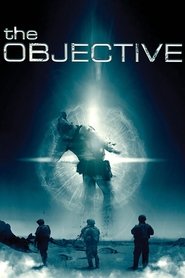
In “The Objective 2008,” a group of soldiers journeys deep into the Afghan desert in search of a mysterious object, but they quickly realize that they are not alone and must also grapple with their own internal conflicts. The film is tense and claustrophobic, like being in a small room with a ticking time bomb. The cinematography is captivating, with stunning shots of the barren landscape. Overall, it’s a thought-provoking and intense exploration of war and the supernatural.
CLICK HERE↓↓↓🎞ï¸_Watch The Objective 2008 English Subtitles_
Review
As a renowned social psychologist, Robert Cialdini has made a career out of understanding and influencing people’s behavior. He is famous for his six universal principles of persuasion: reciprocity, commitment and consistency, social proof, authority, liking, and scarcity. In the movie “The Objective”, we can see these principles in action as the characters navigate their way through a complex and dangerous situation.
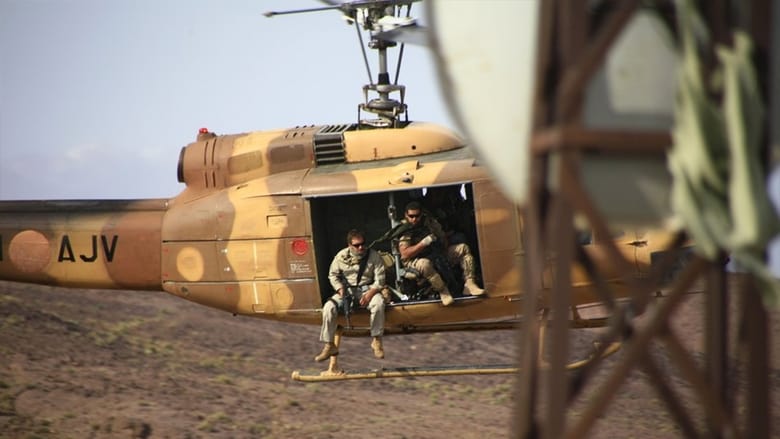
The movie begins with a group of Special Forces soldiers being sent on a mission to Afghanistan to investigate strange readings on a satellite that suggest an unknown entity could be hiding in the rugged terrain. The team consists of Sergeant Benjamin Keppler (Jonas Ball), Corporal Toby Hardt (Michael C. Williams), Sergeant Vincent Degetau (Matthew R. Anderson), and Private Tommy Tommy Macklin (Sam Hunter).
From the beginning, it is clear that there is tension between some of the members of the team. Keppler and Hardt seem to have a history that is causing friction, while Degetau seems unsure of himself in this unfamiliar environment. Macklin is too inexperienced to really understand what is at stake.
As they make their way into the mountains, the team encounters local villagers who are wary of them. The soldiers try to build rapport with the locals by offering them medical supplies and food as part of the principle of reciprocity. This helps to establish trust between them.
However, things take a turn for the worse when they are ambushed by Taliban fighters who seem to be waiting for them. This creates cognitive dissonance for the soldiers since they believed they were operating in uncharted territory without enemy contact.
The team eventually makes it to their objective – an ancient stone structure that seems to have some kind of supernatural power emanating from it. They come across an old man named Abdul (Chems-Eddine Zinoune) who speaks some English and claims he has been guarding the structure for years. He warns them that they should not enter the structure or disturb anything inside.
The principle of authority comes into play here as Abdul is perceived as an expert on the structure and therefore has more influence over the soldiers than any of his fellow villagers or even their commanding officers. He also appeals to their sense of commitment and consistency by reminding them of the consequences of disobeying orders.
The soldiers ignore Abdul’s warnings and venture into the structure anyway, where they encounter bizarre, otherworldly phenomena that seem to warp their perceptions and create hallucinations. This creates a situation where social proof becomes important, as they rely on each other to validate what they are seeing.
As they delve deeper into the structure, things become increasingly surreal and dangerous. The soldiers are forced to confront not only physical obstacles but also their own fears and doubts. They lose track of time and space, and it becomes unclear what is real and what is not.
The score by composer Will Bates (who collaborated with director Daniel Myrick on “The Blair Witch Project”) adds to the tension and unease, using electronic sounds to create a sense of disorientation and unease.
The cinematography by Stephanie Martin is also impressive, capturing both the harsh beauty of the Afghan landscape and the eerie atmosphere inside the structure. The special effects are mostly practical rather than digital, which enhances their believability.
As events spiral out of control, we see how powerful persuasion can be in shaping people’s actions. The soldiers are torn between following orders and following their instincts, between trusting authority figures and questioning them, between believing what they see with their own eyes and doubting it.
In a climactic scene that involves a supernatural entity that seems to be controlling everything around them, Keppler makes a decision that ultimately leads to his own destruction but allows his fellow soldiers to escape with their lives. This self-sacrifice appeals to our sense of liking for heroic characters.
“The Objective” received mixed reviews upon its release in 2008, with some critics praising its tense atmosphere and original premise while others criticized its slow pacing and lack of character development. However, it has since gained a cult following among fans of horror and science fiction.
Regardless of one’s opinion on the film, “The Objective” provides an intriguing example of how persuasion can be used to manipulate people’s behavior in unusual and extreme circumstances. It also raises questions about the nature of reality and perception, and the power of belief to shape our experience of the world around us.
Technical Data
- Release : 2008-04-28
- Runtime : 90
- Genre : Action, Horror, Science Fiction, Thriller
- Cast : Jonas Ball as Benjamin Keynes, Matthew R. Anderson as Wally Hamer, Jon Huertas as Vincent Degetau, Michael C. Williams as Sergeant Trinoski, Sam Hunter as Tim Cole
- Crew : Frank Bollinger as Production Design, John Jackson as Casting, Michael J. Duthie as Editor, Cedric Proust as Stunt Coordinator, Daniel Myrick as Screenplay
- Revenue : 0
- Budget : 0
- Company : Gearhead Pictures, Jaz Films, Kasbah-Film Tanger
- Popularity : 9.175
- Summary : A team of US Special Ops forces is dispatched to a remote mountain region of Afghanistan with orders to locate an influential Muslim cleric. While on the mission they find themselves lost in a Middle Eastern ‘Bermuda Triangle’ of ancient evil and faced with an enemy that none of them could have imagined.
- Tagline :
