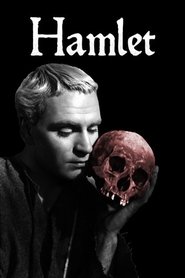
In “Hamlet 1948,” a young prince struggles with his existential crisis and the guilt of his father’s murder. The movie is filled with eloquent speeches, vivid imagery, and stunning cinematography that bring Shakespeare’s timeless play to life. The themes of revenge, betrayal, and madness are explored through the haunting performances of the cast. Hamlet’s soliloquies are particularly noteworthy, as they capture the character’s inner turmoil in a way that is both poignant and unforgettable. Overall, “Hamlet 1948” is a classic film adaptation of one of Shakespeare’s most celebrated works.
CLICK HERE⤓⤓⤓🎥_Watch Hamlet 1948 English Subtitles_
Review
Shakespeare’s “Hamlet” has been described as a masterpiece that has stood the test of time. Its appeal spans generations, with each new adaptation bringing its own interpretation and flavor to the table. From stage to screen, the play has been reinterpreted in countless ways, but one thing is certain: it remains relevant even today.
The basic story of “Hamlet” is well-known. The prince of Denmark, Hamlet, is devastated by his father’s death and outraged when his mother marries his uncle, Claudius. This sets off a chain of events that culminates in tragedy.
What makes this play so enduringly popular? Perhaps it’s because it taps into something universal: the human experience of loss, betrayal, and grief. Shakespeare himself was no stranger to tragedy; he lost a son at the age of eleven.
But “Hamlet” isn’t just about sadness. There are moments of humor and levity interspersed throughout the play. One of the most famous examples is Hamlet’s encounter with Yorick’s skull: “Alas, poor Yorick! I knew him, Horatio; a fellow of infinite jest…”
This line has been quoted and referenced countless times in popular culture over the years. It speaks to the idea that even in death, we remember those who brought us joy and laughter.
Of course, no discussion of “Hamlet” would be complete without mentioning some of its iconic characters. Hamlet himself is a complex figure who vacillates between despair and rage throughout the play. His soliloquies have become legendary: “To be or not to be…”
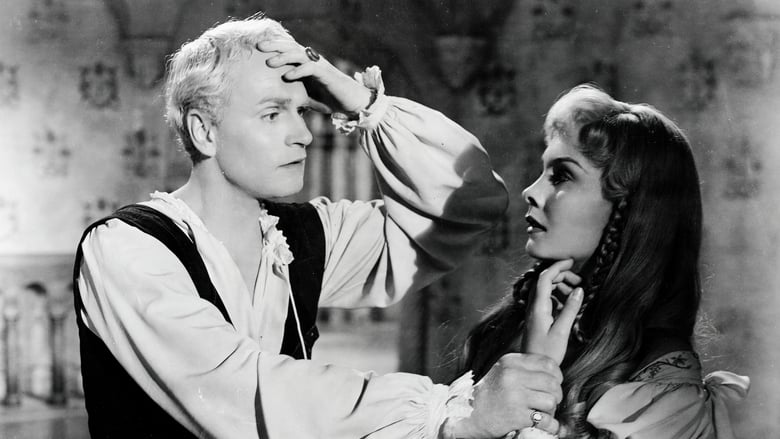
Ophelia is another memorable character whose descent into madness is heart-wrenching. Her father Polonius also provides some comic relief with his long-winded speeches.
The role of Claudius requires an actor with gravitas; he must embody both charm and duplicity. Kenneth Branagh played the role in his 1996 film adaptation, and his performance was widely praised.
Speaking of adaptations, there have been many over the years. From Laurence Olivier’s 1948 film to Michael Almereyda’s 2000 version set in modern-day New York City, each brings its own unique spin to the story.
One of the reasons “Hamlet” lends itself so well to adaptation is its timeless themes. No matter what era or setting it’s placed in, the story of a young man grappling with grief, revenge, and morality still rings true.
The play has also inspired countless works of art beyond the stage and screen. Novels like John Updike’s “Gertrude and Claudius” and Tom Stoppard’s “Rosencrantz and Guildenstern Are Dead” reimagine Shakespeare’s characters in new contexts.
Even music has been influenced by “Hamlet.” The band Queen famously used lines from the play in their song “Bohemian Rhapsody”: “Bismillah! No, we will not let you go (Let him go) / Let him go (Bismillah!)”
As for the movie adaptations themselves, they often receive high critical acclaim. Branagh’s aforementioned version holds an 83% rating on Rotten Tomatoes, while Olivier’s film boasts a perfect 100%.
But there are some who argue that adapting Shakespeare for modern audiences is a fruitless endeavor. They claim that the plays were written for a specific context and language that is difficult to replicate today.
Still, others argue that Shakespeare can be made accessible without losing its power. Baz Luhrmann’s “Romeo + Juliet” is one example of a modern adaptation that successfully captures the essence of the original story while making it fresh for contemporary audiences.
Whatever your opinion on adaptations may be, it cannot be denied that “Hamlet” remains a cultural touchstone. Its story and characters continue to captivate audiences after centuries, and its influence can be seen in everything from literature to music to film.
Perhaps that is the true power of “Hamlet”: it speaks to something universal and timeless within all of us. As long as there are people struggling with grief, betrayal, and morality, this play will continue to be relevant.
Technical Data
- Release : 1948-12-10
- Runtime : 153
- Genre : Drama
- Cast : Laurence Olivier as Hamlet – Prince of Denmark / Voice of Ghost, Jean Simmons as Ophelia – His Daughter, John Laurie as Francisco, Esmond Knight as Bernardo, Anthony Quayle as Marcellus
- Crew : Laurence Olivier as Screenplay, Laurence Olivier as Director, Laurence Olivier as Producer, William Shakespeare as Author, Harry Miller as Sound Editor
- Revenue : 0
- Budget : $750,000
- Company : Two Cities Films, J. Arthur Rank Organisation
- Popularity : 11.014
- Summary : Winner of four Academy Awards, including Best Picture and Best Actor, Sir Laurence Olivier’s Hamlet continues to be the most compelling version of Shakespeare’s beloved tragedy. Olivier is at his most inspired—both as director and as the melancholy Dane himself—as he breathes new life into the words of one of the world’s greatest dramatists.
- Tagline : The motion picture of all time … for all time!
