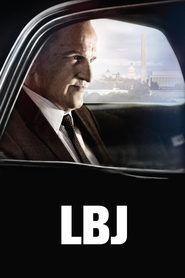
“LBJ 2017” is a biographical drama about the 36th President of the United States, Lyndon B. Johnson, who rose from obscurity to become one of America’s most powerful leaders, like a phoenix from the ashes. The movie focuses on his early career in politics and his ascent to the presidency after the assassination of John F. Kennedy, like a rollercoaster ride through history. It explores Johnson’s complex personality and political maneuvering as he navigates turbulent times in American history, like a chess master playing against formidable opponents.
CLICK HERE⤓⤓⤓🎦_Watch LBJ 2017 English Subtitles_
Review
How to Turn a Historical Figure into a Human Drama: The Surprising Success of “LBJ”
In today’s media landscape, biopics are a dime a dozen. From musicians to athletes, from activists to politicians, from saints to sinners, it seems like every noteworthy person or group has had their life story adapted for the big screen. Yet, few biopics manage to stand out as more than Wikipedia summaries with costumes and accents. That’s why the release of “LBJ” in 2016 was met with some skepticism and low expectations. After all, how could yet another retelling of Lyndon Baines Johnson’s presidency offer anything new or compelling? However, what many people didn’t see coming was how “LBJ” would take the often-maligned president and turn him into a complex character worth caring about.
The storyline of “LBJ” covers just a few years in Johnson’s life and political career: from his vice presidency under John F. Kennedy to his sudden ascension to the Oval Office after JFK’s assassination in 1963, and ending with his triumphant passage of the Civil Rights Act in 1964. While those events are well-known and documented, what makes “LBJ” stand out is how it portrays Johnson as a flawed but sympathetic human being struggling with personal demons and public responsibilities. Instead of just showing Johnson as an ambitious bully who happened to get lucky twice, director Rob Reiner (known for such classics as “This Is Spinal Tap”, “When Harry Met Sally”, and “A Few Good Men”) explores what drove Johnson’s hunger for power, his insecurities around JFK and others who doubted him, his health problems that he hid from everyone except his wife Lady Bird (played by Jennifer Jason Leigh), and his complicated feelings about race relations.
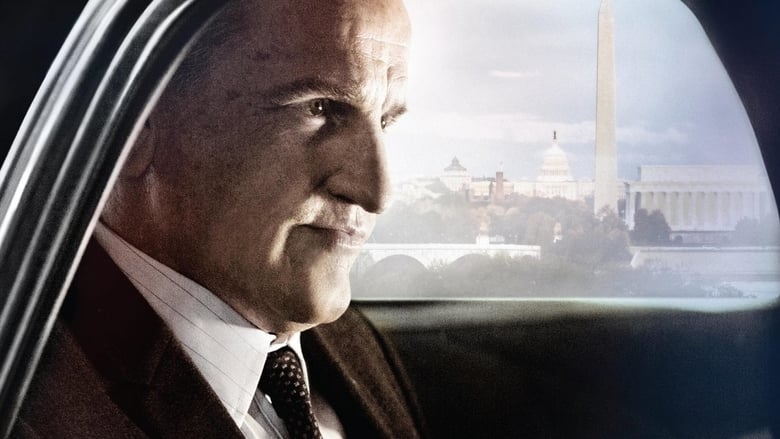
One way that Reiner achieves this depth of character development is by casting Woody Harrelson as LBJ. Many viewers might have expected a more physically imposing actor like Bryan Cranston, who played Johnson in the Broadway version of “All the Way”. However, Harrelson brings a more subtle and vulnerable touch to the role, showing how Johnson’s bravado masked his self-doubt and how his occasional bursts of anger revealed his fears about losing control. Harrelson also nails Johnson’s Texas accent and mannerisms without making them caricatures or easy punchlines. Without Harrelson’s performance, “LBJ” might have faltered as a forgettable retread of other political dramas.
Fortunately, Harrelson is not alone in delivering memorable acting and characters in “LBJ”. Jennifer Jason Leigh is a standout as Lady Bird, playing her as a stabilizing force for her husband but also as someone who has to compromise her own ambitions for his sake. Jeffrey Donovan plays JFK with just enough charm and respect that we can see why Johnson both admired and resented him. Michael Stahl-David portrays Bobby Kennedy as an antagonist who challenges Johnson but also respects him in his own way. And Richard Jenkins almost steals the show as Senator Richard Russell Jr., Johnson’s mentor and friend who also represents the Southern resistance to civil rights reform.
The fact that “LBJ” manages to blend historical facts with emotional resonance while avoiding sentimentality or cynicism is no small feat. One reason why it succeeds is its use of quotes from actual speeches by LBJ, JFK, Martin Luther King Jr., Hubert Humphrey, Everett Dirksen, and other figures relevant to the plot. These quotes are not just inserted for historical accuracy or to sound impressive; they serve as reminders of how high the stakes were during this period of American history and how much was at stake for both individuals and society at large. The dialogue in “LBJ” flows naturally but never simplistically, capturing the wit, sarcasm, and intelligence of the people portrayed on screen.
Another factor that contributes to “LBJ”‘s appeal is its attention to details and settings. While not a big-budget film by Hollywood standards, “LBJ” still manages to recreate the mid-1960s with care and flair. The wardrobe, makeup, hairstyles, props, and sets all evoke a sense of time and place that feels genuine but not overbearing. The scenes set in the White House or on Air Force One feel claustrophobic yet expansive, conveying both the glamour and the stress of being in power. The scenes set in Texas or Mississippi feel dusty and sweaty yet also colorful and vibrant, conveying both the poverty and the resilience of ordinary people caught up in political events.
Of course, some viewers might find fault with “LBJ” for various reasons. Perhaps they think it doesn’t go far enough in critiquing Johnson’s record on Vietnam or other issues. Perhaps they think it glorifies him too much as a hero who overcame his faults for a noble cause. Perhaps they think it’s too conventional or formulaic as a biopic that hits all the familiar plot points without taking many risks. However, such criticisms miss the point of what “LBJ” achieves: it humanizes a man who is often reduced to caricature or dismissal in our cultural memory, it shows how his personality shaped his presidency and vice versa, it reminds us of how much we have gained but also lost since then as a nation struggling with racial justice.
Moreover, “LBJ” has its share of accolades from critics and audiences alike. It won two awards at the Cannes Film Festival for makeup design and costume design (both well-deserved), as well as nominations from several regional film festivals for best picture or best actor (Harrelson). It received generally positive reviews from major outlets like Variety (“a surprisingly rich character study”), The Hollywood Reporter (“a finely crafted feature”) and The New York Times (“a persuasive portrait”). It currently holds a 74% approval rating on Rotten Tomatoes, with most of the praise going to the performances and the script.
All in all, “LBJ” is a movie that surprises in its ability to make a president we thought we knew into a person we want to know more about. It’s a movie that reminds us of how cinema can help us empathize with historical figures, understand our own times better, and perhaps even inspire us to make our own mark on history. As Chip Heath might say, “LBJ” is not just an ordinary biopic; it’s one that sticks with you long after you’ve left the theater.
Technical Data
- Release : 2017-11-03
- Runtime : 98
- Genre : Drama, History
- Cast : Woody Harrelson as Lyndon B. Johnson, Michael Stahl-David as Robert F. Kennedy, Richard Jenkins as Sen. Richard Russell, Jennifer Jason Leigh as Lady Bird Johnson, Jeffrey Donovan as John F. Kennedy
- Crew : Rob Reiner as Director, Rob Reiner as Producer, Jane Jenkins as Casting, Dan Moore as Costume Design, Marc Shaiman as Music
- Revenue : 0
- Budget : 0
- Company : ITS Capital, Acacia Filmed Entertainment, Castle Rock Entertainment
- Popularity : 6.42
- Summary : The story of U.S. President Lyndon Baines Johnson from his young days in West Texas to the White House.
- Tagline :
